- About
- Programs
- Faculty of Graduate Studies and Research
- PhD in Business and Management Studies
- PhD in Information and Communication Technology
- Master of Science in Information Technology (MSc.IT)
- Master of Science in Cyber Security and Forensics
- Master of Science in Digital Finance and Technology
- Master of Science in Public Health (General)
- Master of Science in Public Health – Health Informatics
- Master of Science in Public Health – Epidemiology and Biostatistics
- Master of Business Administration (MBA)
- Faculty of ICT
- Master of Science in Information Technology (MSc.IT)
- Master of Science in Cyber Security and Forensics
- Bachelor of Science in Animation and Visual Effects (B.Sc. VFX)
- Bachelor of Science in Applied Information Technology (B.Sc. AIT)
- Bachelor of Science in Artificial Intelligence and Machine Learning (B.Sc. AI & ML)
- Bachelor of Science in Networking and Cyber Security (B.Sc. NCS)
- Bachelor of Science in Computer Science (B.Sc. CS)
- Faculty of Health Sciences
- Faculty of Business & Commerce
- Master of Science in Digital Finance and Technology
- Master of Business Administration (MBA)
- Bachelor of Business Administration in International Marketing (BBA-IM)
- Bachelor of Business Administration in International Business (BBA-IB)
- Bachelor of Hotel Management (BHM)
- Bachelor of Human Resource Management (BHRM)
- Bachelor of Science in Applied Economics (BSc-AE)
- B.Sc. Accounting and Finance
- Faculty of Engineering
- Diploma Programmes
- Pre-University / International Foundation
- Short Courses (Professional / Skill-based)
- Certified Cyber Security Specialist (CCSS)
- Certified Ethical Hacker (CEH) Certification
- Computer Hacking Forensic Investigator (CHFI) Certification
- ISBAT Certified Integrated IT Infrastructure Specialist Programme
- Data Science
- Python
- Cloud Computing
- Linux for Beginners
- Cyber Security for Beginners
- Certified Network Associate (CNA)
- PMP
- Faculty of Graduate Studies and Research
- ISBAT Online
- Research & Innovation
- Alumni
- Career

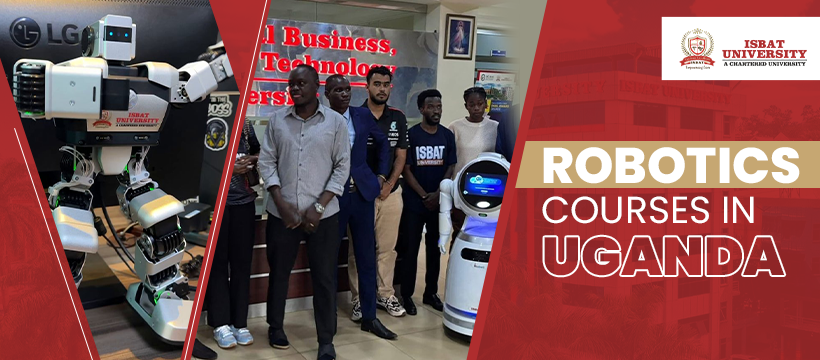
Why Robotics is the Future of Jobs in Uganda and East Africa
June 19, 2026
The nature of work across East Africa is changing at a steady pace. Industries that once depended entirely on manual effort are now turning to automation, data, and intelligent systems to improve speed, accuracy, and output. Uganda, along with neighbouring countries, is seeing growing investment in infrastructure, manufacturing, agriculture, and healthcare. As these sectors expand, the demand for skilled professionals who can design, manage, and improve automated systems is rising.
This shift is placing robotics at the centre of future job creation. For students and professionals exploring robotics courses in Uganda, the opportunity is no longer limited to niche roles. It is becoming a practical and stable career path with strong long term value.
The Shift from Manual Work to Smart Systems
For years, many industries in Uganda relied on labour-intensive processes. While this created employment, it also limited efficiency and scalability. Today, businesses are looking for ways to produce more with fewer errors. Robotics offers a clear solution.
Simple automated machines are already being used in packaging, sorting, and assembly tasks. In agriculture, automated irrigation and monitoring systems are improving crop yield. In healthcare, diagnostic tools and lab automation are reducing delays.
This gradual shift does not remove jobs. Instead, it changes the type of work available. There is a growing need for individuals who can operate, maintain, and improve these systems. This is where robotics engineering Uganda is becoming highly relevant.
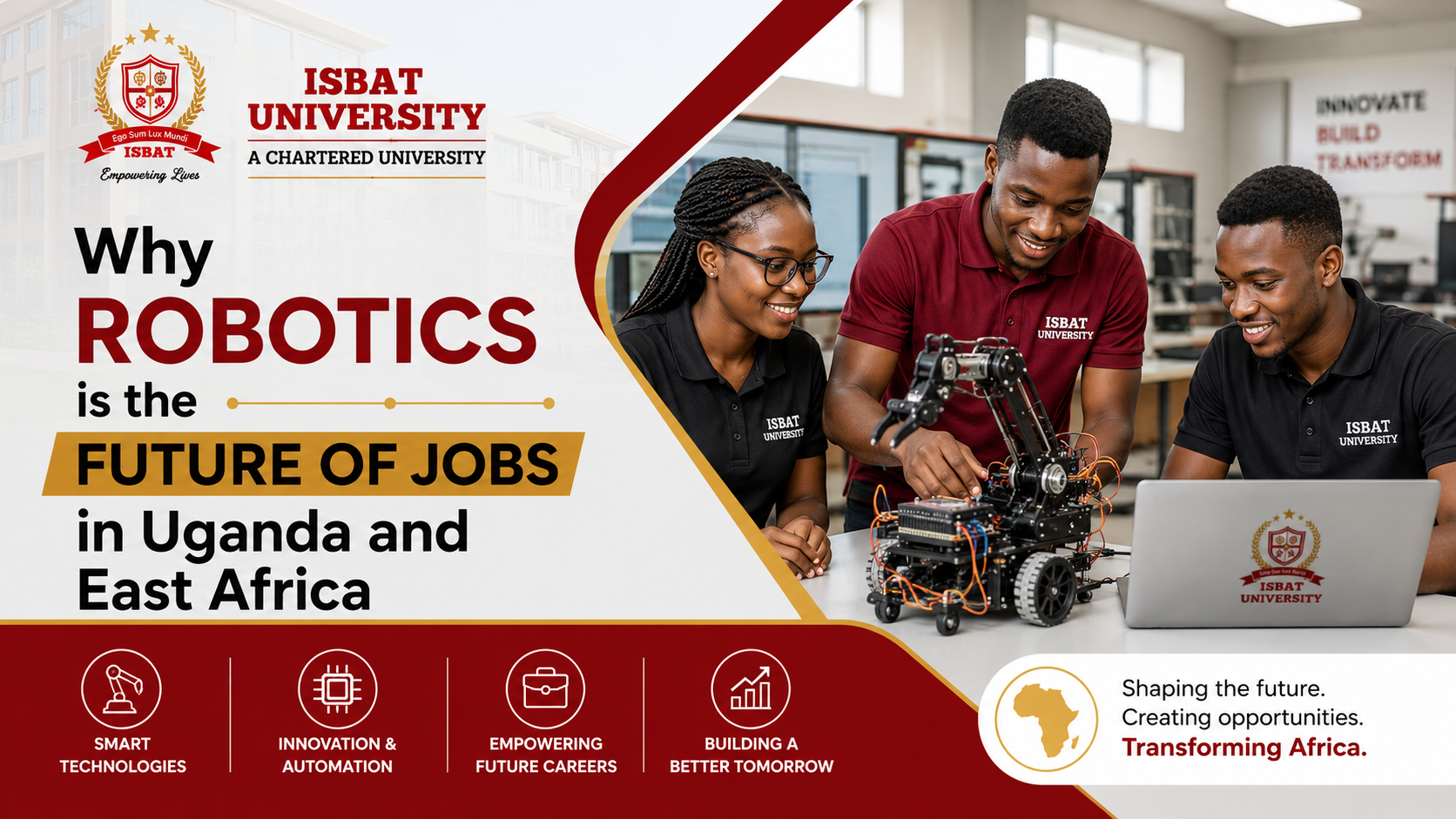
Industry Growth Driving Robotics Demand
Across East Africa, several industries are expanding rapidly. Each of these sectors is creating demand for robotics skills.
Manufacturing and Industrial Automation
Manufacturing is becoming more organised and process-driven. Companies are investing in automated systems to improve consistency and reduce waste. Robotics is helping with repetitive tasks such as assembly, quality checks, and packaging.
Agriculture and Food Production
Agriculture remains a major part of Uganda’s economy. Robotics is helping farmers monitor soil conditions, automate irrigation, and manage crops more efficiently. These solutions are especially useful in dealing with unpredictable weather patterns.
Healthcare and Medical Services
Healthcare facilities are adopting technology to improve patient care. Automated lab systems, imaging tools, and assistive devices are becoming more common. Skilled professionals are needed to manage and support these systems.
Logistics and Supply Chain
With the growth of e-commerce and trade, logistics systems are becoming more complex. Robotics is being used in sorting, warehousing, and inventory management. This creates opportunities for engineers who understand both hardware and software systems.
The Role of Robotics in Solving Local Challenges
Robotics is not only about efficiency. It also plays a role in solving real problems faced by communities.
In rural areas, access to healthcare and education can be limited. Robotics-based solutions can help bridge these gaps through remote diagnostics and automated learning tools.
In agriculture, small scale farmers can benefit from low-cost automation tools that improve productivity without requiring large investments.
In urban areas, traffic management, waste handling, and public safety can be improved through automated systems and smart technologies.
Students who pursue robotics courses in Uganda are not only preparing for jobs. They are gaining the ability to create solutions that directly impact society.
Why Robotics Skills Are Becoming Essential
The demand for robotics professionals is not limited to large companies. Small and medium enterprises are also beginning to adopt automation to stay competitive.
This creates a wide range of opportunities for graduates. Some of the key skills that are becoming essential include:
- Programming and system control
- Understanding sensors and electronic systems
- Data analysis and system optimisation
- Problem solving in real world scenarios
Unlike traditional roles, robotics combines multiple areas of knowledge. This makes it a strong career choice for students who want flexibility and long term growth.
Education and Skill Development in Uganda
As demand increases, the education system is adapting to meet industry needs. More institutions are offering specialised programs that focus on both theory and practical learning.
Students enrolling in robotics courses in Uganda are now exposed to real projects, lab work, and industry-based learning. This helps them build confidence and develop skills that are directly applicable in the workplace.
Hands-on experience is especially important in robotics. Learning how to design, test, and improve systems prepares students for real challenges they will face after graduation.
Career Opportunities in Robotics
The career scope for robotics graduates is wide and continues to expand. Some of the roles that are gaining popularity include:
- Robotics Engineer
- Automation Engineer
- Machine Learning Specialist
- Embedded Systems Developer
- Data Analyst for automation systems
These roles are not limited to one industry. Graduates can work in manufacturing, healthcare, agriculture, logistics, and even research.
With the right skills, professionals trained in robotics engineering Uganda can also explore opportunities beyond the region. Many companies are open to remote work, allowing skilled individuals to work on global projects.
The Entrepreneurial Opportunity
One of the most exciting aspects of robotics is its potential for entrepreneurship. East Africa has a growing startup ecosystem, and technology-based solutions are gaining attention.
Graduates with robotics skills can start their own ventures by creating solutions tailored to local needs. This could include agricultural tools, automation systems for small businesses, or affordable healthcare devices.
This not only creates personal growth but also contributes to job creation within the community.
Apply Now
Challenges and the Way Forward
While the future of robotics is promising, there are challenges that need to be addressed.
Access to resources and equipment can be limited in some areas. There is also a need for more trained educators and industry partnerships.
However, progress is being made. Universities and institutions are investing in better infrastructure and updated programs. Collaboration between education providers and industry players is also improving.
Students who take initiative and seek practical experience will have a strong advantage in this evolving field.
How ISBAT University Supports Future Robotics Professionals
At ISBAT University, being one of the best universities in Uganda, we focus on preparing students for real world careers in robotics and intelligent systems. Our approach combines strong academic foundations with practical exposure. We ensure that our students work on real projects, use modern tools, and understand how systems function in actual industry settings.
We offer a learning environment that encourages problem solving, innovation, and collaboration. Our programs are designed to align with current industry needs so that our graduates are ready to contribute from day one. Through our focus on hands-on training and career readiness, we aim to shape professionals who can lead the growth of robotics engineering in Uganda and beyond.
Conclusion
Robotics is steadily shaping the future of jobs in Uganda and East Africa. As industries grow and adopt new technologies, the need for skilled professionals will continue to rise. This is not a short-term trend but a long-term shift that is transforming how work is done across sectors.
For students and professionals, this presents a clear opportunity. By pursuing robotics courses in Uganda, they can build skills that are relevant, practical, and in demand. Whether the goal is employment, research, or entrepreneurship, robotics offers a strong and future-ready career path.
As a leading institution committed to innovation and technology education, ISBAT University provides students with the knowledge, hands-on experience, and industry-focused training needed to succeed in the evolving field of robotics. The region is moving forward, and those who are prepared to adapt, learn, and embrace emerging technologies will be the ones leading that change.
Frequently Asked Questions
1. Are robotics jobs really in demand in Uganda and East Africa?
Yes, demand is growing steadily as industries adopt automation and smart systems. Sectors like manufacturing, agriculture, healthcare, and logistics are actively seeking professionals with robotics and automation skills.
2. What qualifications do I need to start a career in robotics engineering in Uganda?
A degree or diploma in robotics, artificial intelligence, or a related engineering field is typically required. Enrolling in specialised robotics courses in Uganda helps build both technical knowledge and practical skills needed for the industry.
3. Is robotics engineering a good career choice in Uganda?
Robotics engineering offers strong career growth, diverse job opportunities, and the ability to work across multiple industries. With the rise of automation, robotics engineering Uganda is becoming a future-ready and stable career path.
4. Can I work internationally after studying robotics in Uganda?
Yes, robotics skills are globally relevant. With the right training and experience, graduates can work on international projects, remote roles, or pursue higher studies abroad.
5. What industries hire robotics professionals in East Africa?
Robotics professionals are hired in industries such as manufacturing, agriculture, healthcare, logistics, smart infrastructure, and research. These sectors are increasingly adopting automation to improve efficiency and productivity.

Since 2006, ISBAT University is ranked consistently among the top higher education institutions in Uganda.