- About
- Programs
- Faculty of Graduate Studies and Research
- PhD in Business and Management Studies
- PhD in Information and Communication Technology
- Master of Science in Information Technology (MSc.IT)
- Master of Science in Cyber Security and Forensics
- Master of Science in Digital Finance and Technology
- Master of Science in Public Health (General)
- Master of Science in Public Health – Health Informatics
- Master of Science in Public Health – Epidemiology and Biostatistics
- Master of Business Administration (MBA)
- Faculty of ICT
- Master of Science in Information Technology (MSc.IT)
- Master of Science in Cyber Security and Forensics
- Bachelor of Science in Animation and Visual Effects (B.Sc. VFX)
- Bachelor of Science in Applied Information Technology (B.Sc. AIT)
- Bachelor of Science in Artificial Intelligence and Machine Learning (B.Sc. AI & ML)
- Bachelor of Science in Networking and Cyber Security (B.Sc. NCS)
- Bachelor of Science in Computer Science (B.Sc. CS)
- Faculty of Health Sciences
- Faculty of Business & Commerce
- Master of Science in Digital Finance and Technology
- Master of Business Administration (MBA)
- Bachelor of Business Administration in International Marketing (BBA-IM)
- Bachelor of Business Administration in International Business (BBA-IB)
- Bachelor of Hotel Management (BHM)
- Bachelor of Human Resource Management (BHRM)
- Bachelor of Science in Applied Economics (BSc-AE)
- B.Sc. Accounting and Finance
- Faculty of Engineering
- Diploma Programmes
- Pre-University / International Foundation
- Short Courses (Professional / Skill-based)
- Certified Cyber Security Specialist (CCSS)
- Certified Ethical Hacker (CEH) Certification
- Computer Hacking Forensic Investigator (CHFI) Certification
- ISBAT Certified Integrated IT Infrastructure Specialist Programme
- Data Science
- Python
- Cloud Computing
- Linux for Beginners
- Cyber Security for Beginners
- Certified Network Associate (CNA)
- PMP
- Faculty of Graduate Studies and Research
- ISBAT Online
- Research & Innovation
- Alumni
- Career

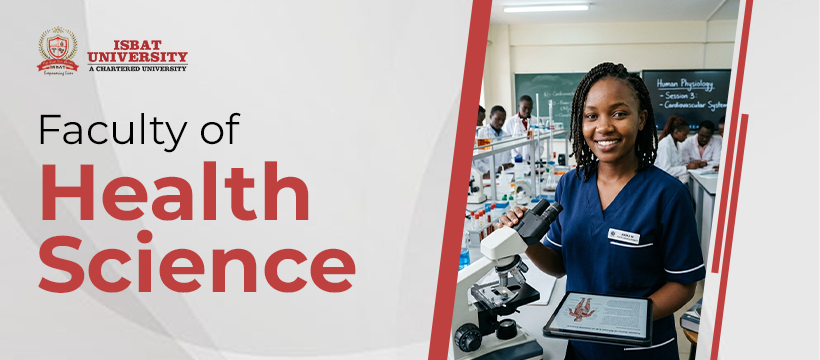
Faculty of Health Science: Empowering Careers in Epidemiology and Biostatistics
June 19, 2026
In an era defined by global pandemics, emerging diseases, and data-driven decision-making, the role of a faculty of health science has never been more critical. As healthcare systems increasingly rely on evidence-based strategies, professionals trained in epidemiology and biostatistics are at the forefront of protecting populations and shaping public health policies. These disciplines combine scientific inquiry, statistical precision, and real-world application to understand disease patterns, evaluate interventions, and guide life-saving decisions. For aspiring public health professionals, specialized education in these areas opens the door to meaningful and impactful careers.
Understanding Epidemiology and Biostatistics
Epidemiology is the study of the distribution and determinants of health-related events in populations. It seeks to answer key questions: Who is affected? Why does a disease occur? How can it be prevented or controlled? Biostatistics complements this by providing the quantitative tools needed to analyze complex health data. Together, they form the analytical backbone of public health research and practice.
From investigating disease outbreaks to assessing the effectiveness of vaccination programs, epidemiologists and biostatisticians translate raw data into actionable insights. They examine patterns, identify risk factors, and evaluate trends that influence healthcare planning. Whether studying chronic illnesses, infectious diseases, or environmental health risks, these professionals ensure that public health decisions are grounded in solid evidence.
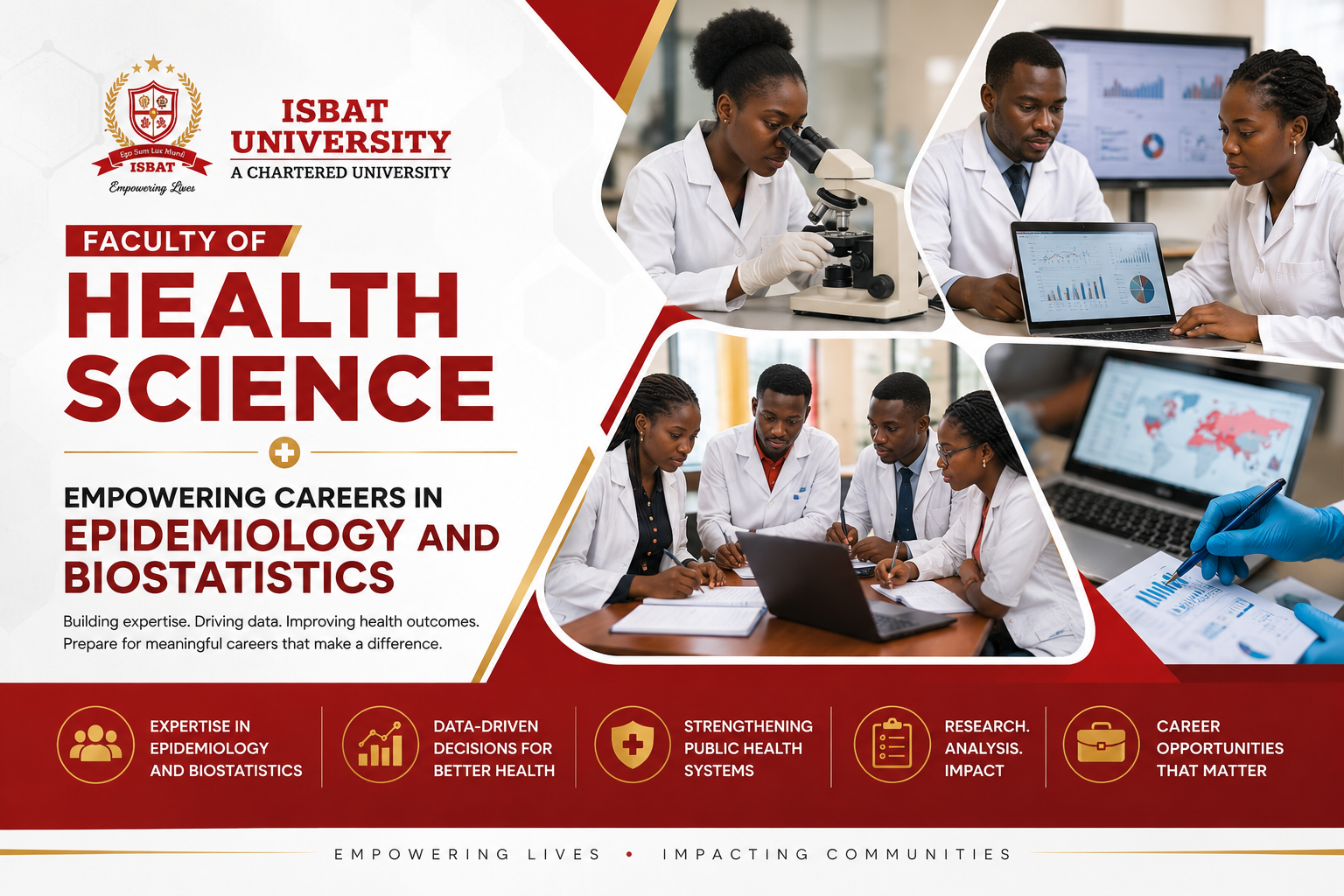
A Curriculum Built on Data and Discovery
A strong academic foundation is essential for success in these fields. Within a faculty of health science, programs in epidemiology and biostatistics are designed to blend theory with hands-on application. Students typically engage in advanced coursework covering epidemiologic methods, statistical modeling, study design, survival analysis, and risk assessment. This combination equips them to investigate complex health challenges with confidence and precision.
Learning extends beyond the classroom. Students work with real datasets, analyze case studies, and use modern statistical software such as SPSS, R, STATA, or SAS to interpret and visualize health information. Through guided research projects, they gain experience in designing studies, collecting data, and applying statistical inference. This applied approach ensures that graduates are not only knowledgeable but also capable of addressing real-world health problems.
The Power of Data-Driven Public Health
Data is central to modern healthcare. In disease surveillance, accurate data collection and interpretation allow authorities to detect outbreaks early and respond effectively. During public health emergencies, epidemiologists track transmission patterns, estimate infection rates, and evaluate intervention strategies. Biostatisticians develop predictive models that inform resource allocation and policy decisions.
By integrating data analytics with public health principles, professionals trained in these disciplines help shape responses to global challenges. They contribute to understanding health disparities, monitoring environmental hazards, and evaluating community health programs. Through evidence-based analysis, they ensure that interventions are efficient, equitable, and impactful.
A forward-thinking faculty of health science emphasizes the importance of critical thinking and problem-solving in this process. Students are encouraged to question assumptions, interpret findings carefully, and communicate results clearly to both scientific and non-scientific audiences. These skills are vital in transforming complex statistical outputs into meaningful recommendations.
Research Excellence and Ethical Responsibility
Epidemiology and biostatistics are rooted in rigorous scientific methodology. Research plays a central role in advancing knowledge and improving health outcomes. Students pursuing these fields often conduct independent research projects under the guidance of experienced mentors. These projects may focus on outbreak investigations, chronic disease studies, health policy analysis, or evaluation of healthcare interventions.
Ethical integrity is equally important. Handling sensitive health data requires strict adherence to confidentiality, data security, and responsible reporting practices. Professionals must ensure that their analyses are unbiased and transparent. By instilling strong ethical principles, a faculty of health science prepares graduates to conduct research that is both scientifically sound and socially responsible.
Preparing for Diverse Career Pathways
The career opportunities in epidemiology and biostatistics are diverse and far-reaching. Graduates can pursue roles such as epidemiologist, biostatistician, health data analyst, clinical research associate, or public health researcher. In government agencies, they design and evaluate health programs. In hospitals and healthcare institutions, they analyze patient data to improve care delivery. In research organizations, they conduct studies that advance medical knowledge.
Global health agencies and non-governmental organizations also rely on data-driven experts to address health challenges in developing regions. These professionals contribute to disease prevention initiatives, vaccination campaigns, and health promotion strategies. Their expertise supports policy development and program implementation at local, national, and international levels.
Within a faculty of health science, students are often exposed to collaborative learning environments that simulate professional practice. Workshops, seminars, and field projects foster teamwork and interdisciplinary understanding. By engaging with peers and industry experts, students build networks that enhance their career prospects and professional growth.
Technology and Innovation in Public Health Analytics
Advancements in technology have transformed the way health data is collected and analyzed. Digital health systems, electronic records, and data repositories generate vast amounts of information that require sophisticated analytical techniques. Epidemiologists and biostatisticians leverage these tools to uncover patterns that would otherwise remain hidden.
Modern programs emphasize proficiency in statistical software and data visualization platforms. Students learn to create predictive models, conduct regression analyses, and interpret survival curves. They also explore how data science intersects with public health, enabling more accurate forecasting and intervention planning.
A comprehensive faculty of health science recognizes the importance of integrating technological competence into its curriculum. By combining epidemiologic theory with advanced analytics, graduates are equipped to navigate the rapidly evolving landscape of digital health.
Apply Now
Addressing Global Health Challenges
The globalized nature of today’s world means that health issues transcend borders. Emerging infectious diseases, climate-related health risks, and non-communicable diseases demand coordinated, data-driven responses. Epidemiologists and biostatisticians play a central role in shaping these responses by providing evidence that informs international strategies.
Training in global health perspectives allows students to understand how socioeconomic factors, environmental conditions, and policy decisions influence health outcomes. By examining case studies from diverse regions, they gain insight into how data-driven insights shape responses to pandemics and other large-scale threats.
Through interdisciplinary collaboration, a faculty of health science fosters professionals who can adapt to complex health environments. These graduates are prepared to analyze diverse datasets, communicate findings effectively, and contribute to sustainable health improvements worldwide.
Transforming Numbers into Impact
At its core, epidemiology and biostatistics transform numbers into knowledge—and knowledge into action. Each dataset represents real people and real health outcomes. By interpreting these numbers accurately, professionals can prevent disease, promote wellness, and save lives.
Students trained in these disciplines develop more than technical skills. They cultivate analytical reasoning, ethical awareness, and a commitment to improving population health. Their work influences everything from clinical guidelines to national health policies.
Advance Your Public Health Journey with ISBAT University
At ISBAT University, we are committed to shaping the next generation of public health leaders through innovation, research, and hands-on learning. We provide impactful health sciences courses in Uganda where theory meets real-world application, empowering our students with advanced analytical, research, and technological skills. Our modern learning infrastructure, expert faculty, and industry-aligned curriculum ensure that you gain practical exposure alongside academic excellence. We focus on nurturing critical thinking, ethical practice, and global perspectives so you can confidently address today’s complex health challenges. Join us and become part of our vibrant community dedicated to transforming healthcare through knowledge and innovation.
Conclusion
A faculty of health science plays a pivotal role in empowering careers in epidemiology and biostatistics. By combining rigorous academic training, hands-on research experience, technological proficiency, and ethical responsibility, it prepares professionals to lead in a data-driven healthcare landscape. As global health challenges continue to evolve, the demand for skilled epidemiologists and biostatisticians will only grow—making this field a powerful pathway for those committed to advancing public health through evidence and innovation. At ISBAT University, students gain the knowledge, practical skills, and research expertise needed to excel in these critical disciplines and contribute meaningfully to improving health outcomes worldwide.

Since 2006, ISBAT University is ranked consistently among the top higher education institutions in Uganda.