- About
- Programs
- Faculty of Graduate Studies and Research
- PhD in Business and Management Studies
- PhD in Information and Communication Technology
- Master of Science in Information Technology (MSc.IT)
- Master of Science in Cyber Security and Forensics
- Master of Science in Digital Finance and Technology
- Master of Science in Public Health (General)
- Master of Science in Public Health – Health Informatics
- Master of Science in Public Health – Epidemiology and Biostatistics
- Master of Business Administration (MBA)
- Faculty of ICT
- Master of Science in Information Technology (MSc.IT)
- Master of Science in Cyber Security and Forensics
- Bachelor of Science in Animation and Visual Effects (B.Sc. VFX)
- Bachelor of Science in Applied Information Technology (B.Sc. AIT)
- Bachelor of Science in Artificial Intelligence and Machine Learning (B.Sc. AI & ML)
- Bachelor of Science in Networking and Cyber Security (B.Sc. NCS)
- Bachelor of Science in Computer Science (B.Sc. CS)
- Faculty of Health Sciences
- Faculty of Business & Commerce
- Master of Science in Digital Finance and Technology
- Master of Business Administration (MBA)
- Bachelor of Business Administration in International Marketing (BBA-IM)
- Bachelor of Business Administration in International Business (BBA-IB)
- Bachelor of Hotel Management (BHM)
- Bachelor of Human Resource Management (BHRM)
- Bachelor of Science in Applied Economics (BSc-AE)
- B.Sc. Accounting and Finance
- Faculty of Engineering
- Diploma Programmes
- Pre-University / International Foundation
- Short Courses (Professional / Skill-based)
- Certified Cyber Security Specialist (CCSS)
- Certified Ethical Hacker (CEH) Certification
- Computer Hacking Forensic Investigator (CHFI) Certification
- ISBAT Certified Integrated IT Infrastructure Specialist Programme
- Data Science
- Python
- Cloud Computing
- Linux for Beginners
- Cyber Security for Beginners
- Certified Network Associate (CNA)
- PMP
- Faculty of Graduate Studies and Research
- ISBAT Online
- Research & Innovation
- Alumni
- Career
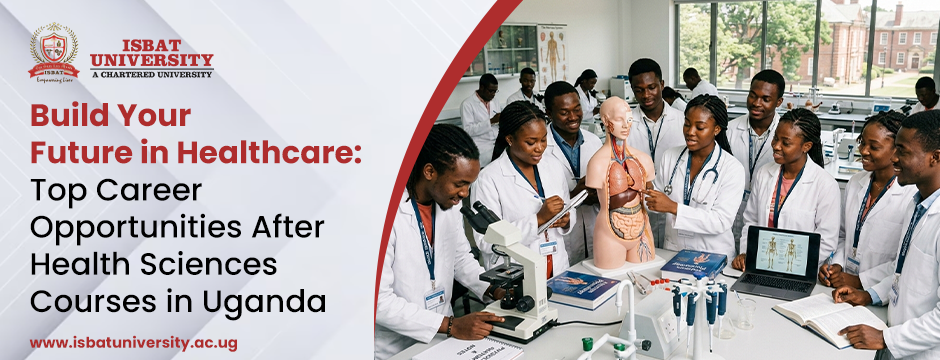
Build Your Future in Healthcare: Top Career Opportunities After Health Sciences Courses in Uganda
February 27, 2026
Healthcare touches every family and every community in daily life. Many young people dream about work that helps others live healthier lives. So, interest in medical learning keeps rising across the country. Uganda needs skilled workers who understand patients and community needs. Health sciences courses in Uganda give students strong knowledge and practical skills. These programs teach how the body works and how care improves life. In addition, students learn ways to prevent common illnesses early. This knowledge helps families stay safe and active. A healthcare career also brings respect and steady opportunities.
However, students need clear guidance before choosing any study path. This guide explains real career options in simple words. It also shows how learning connects to future jobs. Therefore, readers can plan wisely and feel confident. A caring future often begins with the right education and a strong desire to help others.
Understanding Health Sciences Courses in Uganda
Health science focuses on keeping people well. It studies the body, illness, and safe care. Students learn how diseases start and how to stop them. Health sciences courses in Uganda combine class lessons with hands-on practice. Therefore, learners see real situations early. Teachers guide students step by step. In addition, practical sessions build confidence. Students practice simple checks and safe methods.
This learning helps communities later. Good training supports better services. However, students must stay focused and curious. Each topic builds useful understanding. Furthermore, learning includes communication and respect. These values shape good helpers. Over time, students grow into reliable workers. Clear training prepares them for daily duties. So, strong foundations lead to better service and better outcomes.
Types of Health Sciences Programs Available
Students can choose different study levels based on goals. Some begin with certificates for quick entry. Others pick diplomas for deeper skills. Many aim for degree programs for broader knowledge. Health sciences courses in Uganda appear at all these levels. Therefore, learners find flexible paths. Some programs last one year. Others take several years. In addition, each level adds new skills. Practical work remains important at every stage. Students visit clinics and labs. This exposure builds real understanding.
However, time management helps success. Learners should match programs with interests. Furthermore, guidance from teachers helps decisions. Clear goals make choices easier. Step by step, students move forward. Each level opens new learning and new responsibility.
Why Healthcare Is a Promising Career in Uganda
Healthcare work stays important in every society. Uganda continues to need trained helpers. Therefore, demand remains steady for skilled workers. Health sciences courses in Uganda prepare students for these roles. Many jobs serve hospitals and communities. So, graduates find meaningful work.
In addition, families respect health workers. This respect builds pride. The work also supports stable income. However, it requires patience and care. Patients depend on good support. Furthermore, learning never stops in this field. Workers update skills often. This growth brings new chances. Some move into leadership later. Helping others gives deep satisfaction. So, many students choose this path with hope and purpose for the future.
Core Skills Gained from Health Sciences Courses
Training builds many helpful abilities for daily work. Students learn to listen and explain clearly. They practice careful observation. Health sciences courses in Uganda strengthen thinking and decision skills. Therefore, students handle problems calmly. Teamwork also becomes important. Good teams support better care. In addition, students learn respect and honesty. These values guide patient care. Practical sessions build steady hands. Learners follow safety steps.
Furthermore, time management helps during busy days. Calm behavior supports patients. Each skill connects to a real service. However, practice remains necessary. Repetition builds confidence. Over time, learners grow dependable. These skills open many paths. Strong foundations help students serve people with care and responsibility.
Career Options in Healthcare for Aspiring Professionals
Nursing and Midwifery
Nurses support patients through treatment and recovery. They check health signs and give comfort. Midwives guide mothers during pregnancy and birth. Health sciences courses in Uganda prepare students for these caring roles. Training includes clinic practice. Therefore, learners see real situations. Nurses work in hospitals, clinics, and communities. In addition, they teach families about hygiene. This guidance prevents illness. Career growth remains possible with experience. Some become supervisors.
However, the work can feel busy. Good organization helps daily tasks. Furthermore, kindness builds trust with patients. Communities value these helpers. Many nurses feel proud of their service. This path suits people who enjoy caring for others with patience and steady attention.
Medical Laboratory Science
Laboratory workers study samples to support diagnosis. They test blood and other materials. Their work guides treatment decisions. Health sciences courses in Uganda teach safe lab methods. Therefore, students learn correct steps. Accuracy remains very important. In addition, labs follow strict safety rules. Workers record results carefully. This care protects patients. Labs exist in hospitals and centers. Some support research work. However, focus stays necessary. Small errors can change results.
Furthermore, organized habits help daily tasks. Skilled workers gain trust from doctors. Experience builds confidence. Many enjoy the quiet, careful environment. This role fits people who like detail and routine. Good training leads to reliable service and steady career growth.
Public Health Professional
Public health workers protect whole communities. They teach families about clean habits. They plan programs that reduce disease. Health sciences courses introduce prevention and community study. Therefore, students learn early action. They also learn how to share messages. In addition, they collect simple data. This information guides plans. Many work with local groups. Some support national campaigns.
However, planning takes patience. Clear communication improves results. Furthermore, teamwork supports outreach. Public health creates a wide impact. It helps many people at once. Workers feel proud of community change. This path suits people who enjoy teaching and organizing. Step by step, their work improves safety and awareness across neighborhoods.
Pharmacy and Pharmaceutical Services
Pharmacy workers handle medicines with care. They check doses and explain use. Their guidance helps safe treatment. They work in hospitals and shops. Some manage medicine supplies. In addition, they watch quality and storage. This protects patients from harm. Training builds strong knowledge about drugs. Careful records support safety. However, responsibility stays high. Patients trust their advice. Furthermore, clear speech helps understanding.
Many enjoy helping people recover. Experience brings growth. Some move into supervision. Organized habits help daily tasks. This path suits careful and friendly people. Good practice keeps services safe and helpful. Step by step, pharmacists support recovery and comfort for many families.
Clinical Officers and Clinical Medicine
Clinical officers treat common illnesses. They examine patients and suggest treatment. They often serve busy clinics. Therefore, communities rely on them daily. Their support helps doctors. Training includes diagnosis and care steps. Students practice simple procedures. In addition, they learn patient guidance. This advice supports recovery. However, calm thinking remains important. Clear notes help follow up.
Furthermore, respectful behavior builds trust. Many officers work in rural areas. Their service reaches many families. Experience builds confidence. Some continue studying later. This role suits practical people. Step by step, they become reliable helpers who support steady care and clear guidance for everyday health needs.
Health Services Administration
Some graduates choose management roles in health settings. They organize staff and schedules. Good planning keeps services smooth. Administrators track supplies and simple records. In addition, they support rules and procedures. Their work helps teams perform well. However, leadership needs patience. Clear communication solves many issues. Furthermore, problem-solving improves systems. Managers coordinate daily activities. They also support patient flow. Experience builds stronger leadership.
Many enjoy guiding teams. This path suits organized people. Careful planning saves time. Good managers support better service quality. Step by step, their efforts improve daily operations and patient experience across facilities and community centers.
Emerging Opportunities in Uganda’s Health Sector
Health work changes with new tools. Technology now supports many services. Telehealth connects patients and helpers. Digital records store simple information. Therefore, workers learn basic systems. Some support outreach programs. Others handle data tasks. In addition, global projects invite helpers. These roles grow slowly. Curious learners adapt faster. However, learning new tools takes effort. Simple training helps understanding.
Furthermore, teamwork supports success. New roles bring fresh chances. Many students feel excited about change. Care and technology can work together. Step by step, services improve. These opportunities suit flexible people. The future brings roles that combine care, communication, and simple technology use.
Tips to Improve Employability After Graduation
Students should treat internships seriously. Practice builds real confidence. Asking questions improves learning. Therefore, curiosity helps growth. Networking also opens chances. Meeting professionals gives insight. In addition, short courses add value. Certificates show effort. Students should read often. Health knowledge changes over time. However, attitude matters greatly.
Employers like dependable workers. Furthermore, punctuality shows respect. Simple habits build trust. Volunteering adds experience. Many employers value real exposure. Step by step, preparation helps success. Clear goals guide actions. Graduates who stay active find more chances. Consistent learning supports steady progress and better readiness for real responsibilities in daily health service work.
Final Thoughts
Healthcare careers allow people to support lives in meaningful ways. They bring pride, purpose, and daily human connection. Students who choose this path serve families and communities with care. Therefore, choosing the right education matters for long-term success. Careful planning helps students avoid confusion later. Learning with the right support builds confidence and direction. Our team at ISBAT University supports students who want healthcare careers. We guide learners with practical knowledge and personal attention. If you want a future in healthcare, connect with us today. Explore our programs and speak with our team to begin your journey.
Since 2006, ISBAT University is ranked consistently among the top higher education institutions in Uganda.